Many people across Africa and the diaspora share the same quiet regret: they understand some of their family's language, maybe a lot of it, but cannot hold a conversation. They can follow the jokes at a family gathering but not tell one. The good news is that heritage learners have a real head start. Here is how to use it.
1. Start with the words you will use today
Skip long vocabulary lists. Begin with greetings, thank you, please, how are you, and the words for family: mother, father, grandmother, uncle, sibling. In many African languages, these words carry respect and relationship in ways English does not, so learning them properly earns real goodwill.
2. Listen before you worry about grammar
Much of Africa's linguistic richness lives in sound: tones in Yorùbá, Igbo and Lingála, click consonants in isiXhosa and isiZulu, long and short vowels in Kiswahili and Gĩkũyũ. Listen to native speakers every day, even for five minutes. Your ear will tune in long before your mouth catches up.
3. Ten minutes a day beats two hours on Sunday
Language learning rewards consistency. A short daily habit, such as one lesson with your morning tea or a few new words on the bus, builds memory far better than an occasional marathon.
4. Make an elder your teacher
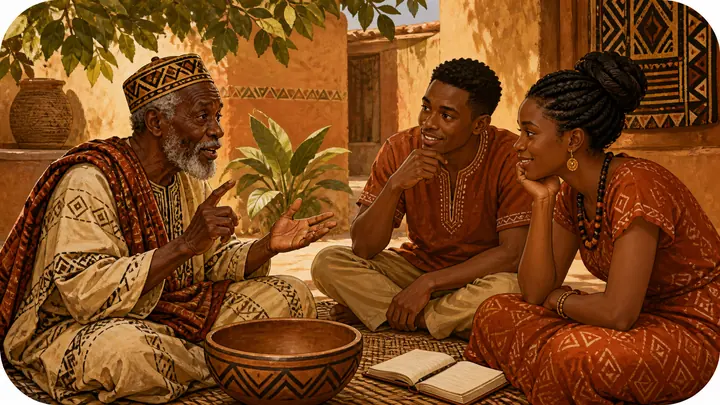
If you have grandparents, aunts or uncles who speak the language, they are your best resource. Ask them for a proverb, a song or the story behind your name. With their permission, record them. Those recordings become family treasures as well as study material.
5. Learn through songs, stories and proverbs
African languages have always been taught orally, through song, storytelling and proverbs. These forms are memorable because they carry rhythm and meaning together. A proverb you understand teaches you grammar, vocabulary and culture in one sentence.
6. Speak badly, and keep speaking
Heritage learners often fear being laughed at by family. Most relatives are delighted that you are trying. Make mistakes out loud, ask to be corrected and laugh along. Fluency comes from speaking, not from waiting until you are perfect.
7. Learn the special letters and tones
Many African languages use letters and marks that English does not: ĩ and ũ in Gĩkũyũ, ẹ and ọ in Yorùbá, the Ɔ and ɛ of Twi, or the Ge'ez script of Amharic and Tigrinya. Learn them early. They change meaning, and writing them correctly shows respect for the language.
8. Use the language for something you love
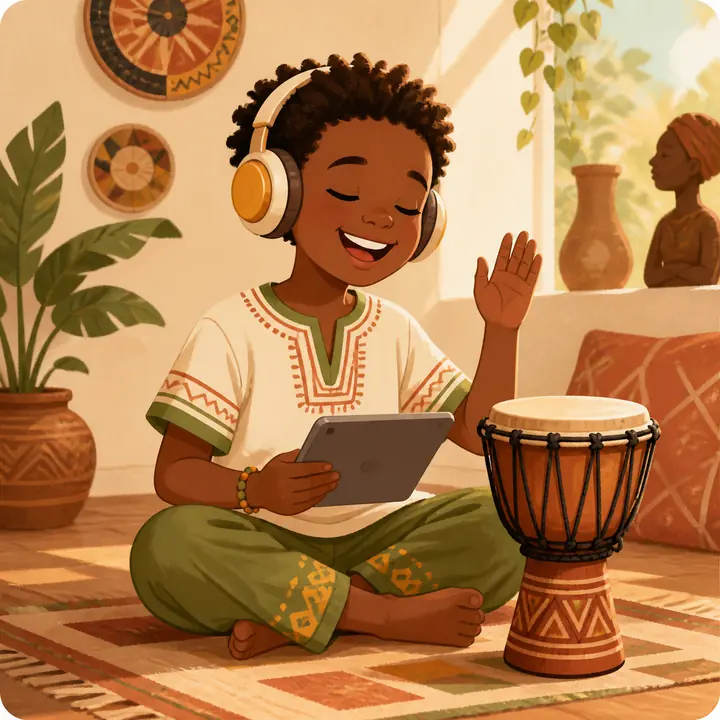
Follow musicians, comedians and creators who use your language. Cook from a family recipe and name the ingredients. Watch a film. The more your language connects to things you enjoy, the more it becomes part of your life rather than a subject you study.
How Afrika Lingo helps
Afrika Lingo was built for heritage learners and newcomers alike. Courses are created by native-speaker tutors and include audio from real voices, folk songs, proverbs with cultural context and a living dictionary you can return to whenever you need it. You can practise speaking, get feedback and learn at your own pace, on your phone, wherever your roots are.