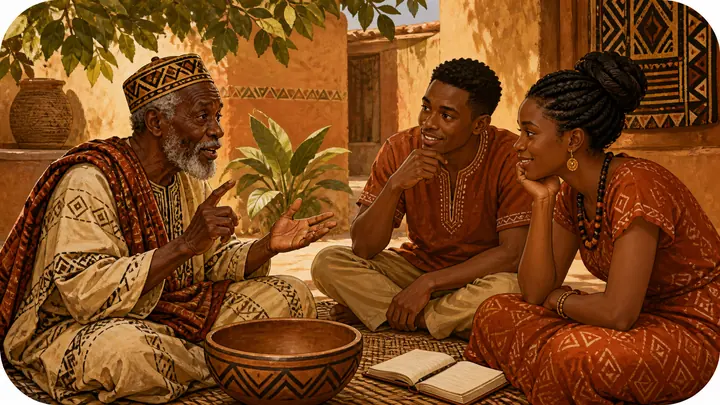
In Lagos there is a television game show with one unbreakable rule: if you speak English, you lose. The show is called Masoyinbo, a Yorùbá name that means “Do not speak English”. Contestants answer questions and compete for prizes while keeping every word in Yorùbá. In a city where English slips into almost every sentence, that is harder than it sounds.
According to an Associated Press report published by Africanews in September 2026, the show is part of a wider revival of African languages, led largely by young people and the diaspora.
“The age of cultural resurgence”
The show's host, Olalekan Fabilola, told AP that a programme like Masoyinbo probably could not have succeeded ten years ago. Today, he said, people want to return to their roots. He called it “the age of cultural resurgence”.
That shift is visible far beyond Lagos. Music, comedy and social media are full of African languages. Young creators mix Yorùbá, Kiswahili, isiZulu, Twi and Lingála into songs and skits that reach audiences across the continent and abroad. A language that once felt old-fashioned to some young people now feels cool, and that matters.
Learning Shona from abroad
The revival is especially strong in the diaspora. AP spoke to Zimbabwean teenagers living abroad who are taking online classes to learn Shona. One student, Nyashadzashe Machingura, described being the only person in the family who could not speak it while siblings and cousins could. That, Machingura said, “just made me feel very left out.”
Many families will recognise the feeling. Children raised abroad, or in cities where a different language dominates, can understand their grandparents but not answer back. They can follow the jokes at a family gathering but not tell one. Learning the language is about belonging.
Why the revival matters, and why it is fragile
Experts warn that enthusiasm alone is not enough. Believe Mubonderi, a linguistics lecturer at Zimbabwe Open University, told AP that African languages were largely confined to home and cultural settings. They “were never exposed or modernised to be used in commerce, to be used in science and technology.”
That is the real challenge. A language thrives when people need it for work, study, entertainment and everyday technology, not only at weddings and funerals. Advocates hope online learning, entertainment and new tools can give African languages that stronger place in modern life.
Where Afrika Lingo fits in
This is the gap Afrika Lingo is built for. If you are a young person who wants to reconnect, a parent raising children abroad, or someone who simply loves a language you grew up around, you can:
- start with greetings and family words you will use straight away;
- hear real native speakers, so you learn the tones and sounds properly;
- learn through songs, proverbs and stories, not just vocabulary lists;
- practise speaking and get feedback from tutors who grew up with the language.
The revival is happening. The best way to be part of it is to start speaking.